If you are looking for a place where privacy, land, and open space shape daily life, Far Hills deserves a closer look. This small Somerset County borough feels different from a typical suburban town, and that difference is exactly the point. In this guide, you will get a clear picture of Far Hills country estates, lifestyle features, and what to expect as a buyer or seller in this unique market. Let’s dive in.
Why Far Hills Feels Different
Far Hills is a small borough in northern Somerset County with a 2020 Census population of 924 and 418 housing units. The borough covers nearly five square miles, which helps explain its quiet, low-density character. With roughly 188 residents per square mile, it reads as a place shaped more by land than by traffic or dense development.
That identity is not accidental. Far Hills was incorporated in 1921, and its local history ties the name to scenic views and a country landscape. Even today, the borough presents itself as a small-town community with signature local landmarks, outdoor amenities, and a rail station that connects residents beyond the immediate area.
Far Hills as an Estate Community
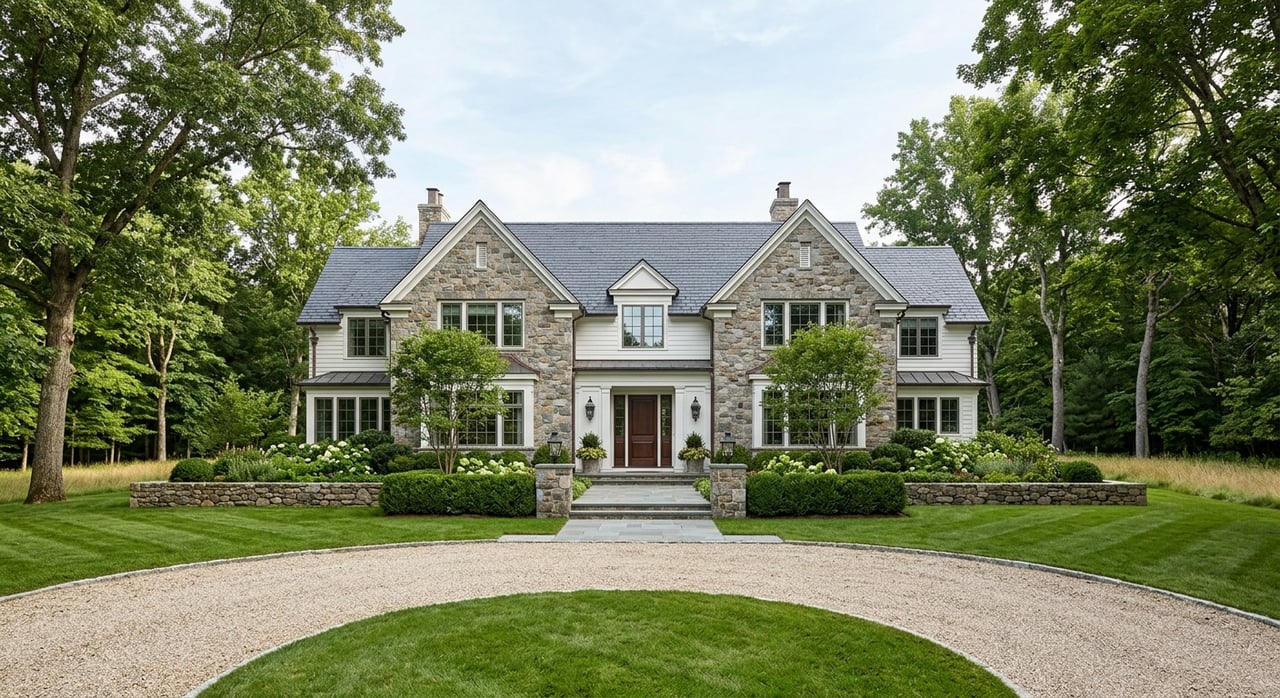
Far Hills stands out because its planning philosophy has long focused on preserving the countryside and protecting the borough’s small-town character. The borough’s master plan is clear about that goal, and large-lot zoning plays a major role in how the community looks and feels. If you are comparing Far Hills to more conventional commuter suburbs, this is one of the biggest differences to understand.
Outside the village center, the borough is defined by very low-density residential development on large parcels. The master plan notes that lot sizes are generally greater than 10 acres, with some parcels exceeding 30 acres. In the R-10 districts, the minimum lot area is 10 acres, which supports the estate-style setting many buyers associate with Far Hills.
This land pattern also helps preserve visual openness. The same planning document reported that forest and agriculture together made up 73.4 percent of the borough’s land cover in the dataset used for the plan. Forest accounted for 46.1 percent, while agriculture made up 27.3 percent, reinforcing the borough’s landscape-first identity.
The Village Core and Daily Convenience
Although Far Hills is known for its countryside, it also has a compact village center. The borough’s commercial and service-oriented uses are concentrated around Route 202 and DeMun Place. That gives the community a defined nucleus for daily errands and practical needs without spreading more intense development across the surrounding landscape.
For many buyers, this balance is a major part of the appeal. You get the feeling of a preserved country enclave, but with a village core that supports day-to-day life. The result is not a suburban grid, but a more selective and intentional pattern of growth.
Lifestyle in Far Hills
Far Hills offers a lifestyle centered on open space, outdoor recreation, and long-standing equestrian traditions. If your idea of home includes room to breathe and a setting that feels connected to the landscape, the borough delivers that in a very visible way. The local identity is tied as much to the land as it is to the homes on it.
The borough highlights a number of signature amenities and events, including the J. Malcolm Belcher Fairgrounds walking track, Leonard J. Buck Garden, the annual Far Hills Steeplechase, and the Essex Horse Trials. These are not minor details. They help define the rhythm, reputation, and public image of the community.
Equestrian Heritage
Far Hills has a strong equestrian identity, and that heritage remains central to how people experience the borough. The Far Hills Steeplechase is one of the community’s best-known traditions, held at Moorland Farm. The event is such a defining feature that NJ Transit identifies Far Hills Station as directly across from Moorland Farm and provides special rail service for the race meeting.
The borough’s master plan also treats Moorland Farm as a key community asset tied closely to Far Hills’ open-space character. For buyers who are drawn to places with a long-established sense of place, this kind of continuity matters. It supports the feeling that Far Hills has preserved its identity over time.
Gardens, Trails, and Open Land
Leonard J. Buck Garden is one of Far Hills’ best-known outdoor destinations. Somerset County describes it as a woodland rock garden, and the garden is known for wooded trails, rock outcroppings, and seasonal spring bloom in Moggy Hollow. It offers a calm, natural setting that reflects the borough’s broader landscape character.
Natirar adds another major layer to the open-space story. Somerset County says the property spans 411 acres across Peapack/Gladstone, Far Hills, and Bedminster, with 124 acres located in Far Hills. Trail loops pass through wooded areas, meadows, fields, and along the North Branch of the Raritan River corridor, giving residents access to a broad range of outdoor scenery.
The fairgrounds are also important in daily life and community identity. The master plan notes that the fairgrounds provide open space for passive and active recreation as well as cultural activities. In a borough where land conservation is a defining priority, that kind of shared open space carries real value.
What Buyers Should Expect
Buying in Far Hills means stepping into a market shaped by land, planning policy, and limited housing supply. This is not a standard suburb where you can assume every property will function the same way. In Far Hills, privacy, acreage, and site-specific conditions are often part of the value proposition.
The borough’s planning documents point to soil limitations, limited water supply, and the absence of sewers as long-standing constraints that helped preserve sparse development. For buyers, that means due diligence matters. Property conditions may vary, and the details of a specific site can be just as important as the home itself.
You should also expect a more selective inventory environment. With only 418 housing units counted in the 2020 Census and a development pattern centered on large parcels, housing opportunities are naturally limited. That can make preparation, timing, and local market guidance especially important when the right property becomes available.
What Sellers Should Understand
If you own property in Far Hills, your home is likely competing in a niche market rather than a broad, high-turnover suburban pool. Buyers are often drawn to the setting first, then to the architecture, land, privacy, and overall experience of the property. That means presentation and positioning need to reflect the estate nature of the borough.
In a place like Far Hills, buyers are not only evaluating square footage or finishes. They are also considering acreage, surroundings, access, recreational context, and how the property fits into the borough’s rural character. A strong marketing strategy should speak to those factors in a clear and polished way.
That is where elevated visuals and thoughtful storytelling can make a difference. For estate and upper-tier homes, professional photography, video, virtual presentation, and targeted buyer outreach help communicate what makes a Far Hills property distinct. In a limited-inventory market, the goal is to present the home with precision and discretion while reaching qualified buyers who value this type of setting.
Commuting and Regional Access
Far Hills offers access, but it does so on its own terms. The borough notes that the train station provides easy access to New York City, and NJ Transit places Far Hills on the Gladstone Branch of the Morris & Essex rail network. For buyers who want some regional connectivity without giving up a rural setting, that can be a meaningful advantage.
At the same time, Far Hills should not be viewed as a typical commuter suburb. The village remains the center for essential retail and service uses, while the surrounding countryside is intended to stay low-intensity. If you value privacy and open land more than a highly built-out streetscape, that tradeoff may feel like a feature, not a limitation.
Is Far Hills Right for You?
Far Hills tends to appeal to buyers who want a landscape-driven lifestyle. You may be drawn to the borough if you value estate-style homes, large parcels, equestrian culture, and protected open space. It can also be a strong fit if you want a home base in Somerset County that feels private and established, yet still connected by rail and local services.
For sellers, Far Hills offers a distinct market story. The borough’s size, planning framework, and reputation create a setting that is different from more common suburban inventory. When that story is marketed well, it helps qualified buyers understand why Far Hills stands apart.
Whether you are considering a purchase, preparing to sell, or simply exploring Somerset County’s luxury enclaves, Far Hills rewards a local, tailored approach. If you want informed guidance on estate properties, buyer representation, relocation support, or a polished marketing strategy for a distinctive home, The McGurl Team is here to help.
FAQs
What is Far Hills known for in Somerset County?
- Far Hills is known for its estate-style setting, large-lot development pattern, equestrian identity, open space, the Far Hills Steeplechase, Leonard J. Buck Garden, and its compact village core.
What kind of homes should you expect in Far Hills?
- You should expect a low-density housing pattern with large parcels, including lot sizes generally greater than 10 acres in many areas, with some parcels exceeding 30 acres according to the borough’s master plan.
Is Far Hills a typical commuter town?
- No. Far Hills has rail access through NJ Transit’s Gladstone Branch and a village center for essential services, but it is better understood as a preserved country enclave than a conventional commuter suburb.
What outdoor amenities are in Far Hills?
- Far Hills includes access to Leonard J. Buck Garden, portions of Natirar, the fairgrounds walking track, open-space areas, and community assets tied to outdoor recreation and cultural events.
Why do buyers look at Far Hills estate properties?
- Buyers often consider Far Hills for privacy, acreage, open views, equestrian character, and a planning approach that has helped preserve the borough’s rural setting and limited development pattern.
What should sellers highlight when marketing a Far Hills home?
- Sellers should highlight the property’s land, privacy, setting, access to open space, connection to the borough’s estate character, and the overall lifestyle that comes with living in Far Hills.