Basic economics says new housing supply should take pressure off existing housing demand. Add enough units to a market and rents soften, buyers gain leverage, and price growth slows down while the market absorbs the new inventory. Berkeley Heights just tested that theory at scale, and the theory lost.
This fall, the first residents moved into RT500, an 11-story, 179-unit apartment tower rising inside The Park, the 185-acre former Connell Corporate Park now mid-transformation into a $500 million live-work-play district. A second tower, the eight-story, 149-unit RT600, broke ground in October 2025 and is under construction now. Together, under the Round Table Residences banner, the two buildings will bring 328 new rental units into a township where single-family homes still dominate the housing stock. That is not a token addition. It is one of the largest single infusions of new housing supply Union County has seen in years.
And yet the township's single-family home values did not soften. They climbed. As of July 2026, the median home value in Berkeley Heights reached $980,841, up 6.7% year over year, placing the town in Union County's top tier alongside Summit and Westfield. If new supply were going to cool anything, this was the moment. It didn't.
Two Different Products, Two Different Buyers
The explanation starts with who can actually afford to live in Berkeley Heights in the first place. The township's median household income sits at $204,658, roughly double Union County's overall median of $103,202. That income gap is the first clue that Berkeley Heights was never a market where renters and buyers were drawing from the same pool of prospective residents competing for the same roof.
RT500's base pricing runs $2,600 to $4,500 a month. That is real money, but it is a fraction of what carrying a $980,000 mortgage requires. The two products sit at opposite ends of a commitment spectrum, and the numbers make that split concrete:
Housing Product | Entry Point | Typical Resident |
|---|---|---|
RT500 apartments | $2,600–$4,500/month | Corporate transferees, professionals testing the area |
Single-family resale (median) | $980,841 (as of July 2026, up 6.7% YoY) | Move-up families choosing schools and commute |
New construction or major renovation | $1.1M–$1.6M+ | Buyers replacing older housing stock outright |
A renter signing a lease at RT500 is not choosing between that apartment and a four-bedroom colonial on Plainfield Avenue. Those are two different decisions, made by two different kinds of households, at two different life stages. The apartment supply and the resale supply were never actually in competition, which is exactly why adding 328 units to one side of the ledger didn't move the other.
The Office Park Underneath the Apartments Explains the Rest
The Park isn't just apartments bolted onto empty land. It sits on top of more than 1.5 million square feet of office space that is 97% occupied, anchored by a $100 million round of hospitality-style office upgrades, reported in 2025, that helped land 100,000 square feet of new long-term office leases, including asset manager Blackstone and law firm Kennedys. A 176-room Embassy Suites and a 112,000-square-foot Life Time Fitness sit on the same campus.
That combination points to who is actually filling RT500's units: not local renters priced out of ownership, but employees relocating for jobs already anchored on that same campus or nearby in Union County's corporate corridor. Berkeley Heights has effectively built a holding pattern for its own future homebuyers. A transferee lands at The Park, rents for a year or two while learning the schools and the commute, and when they're ready to put down roots, they step directly into the same buyer pool as everyone else chasing one of the 55 homes that were on the market in May 2026, a stretch when homes sold in a median of 15 days. The rental tower didn't create a release valve for resale demand. It created a pipeline feeding it.
This is the piece easy to miss if you're only watching the top-line numbers. New supply that looks like it should compete with your target market sometimes turns out to be quietly building your future competition for the same handful of listings.
What the Median Price Doesn't Tell You
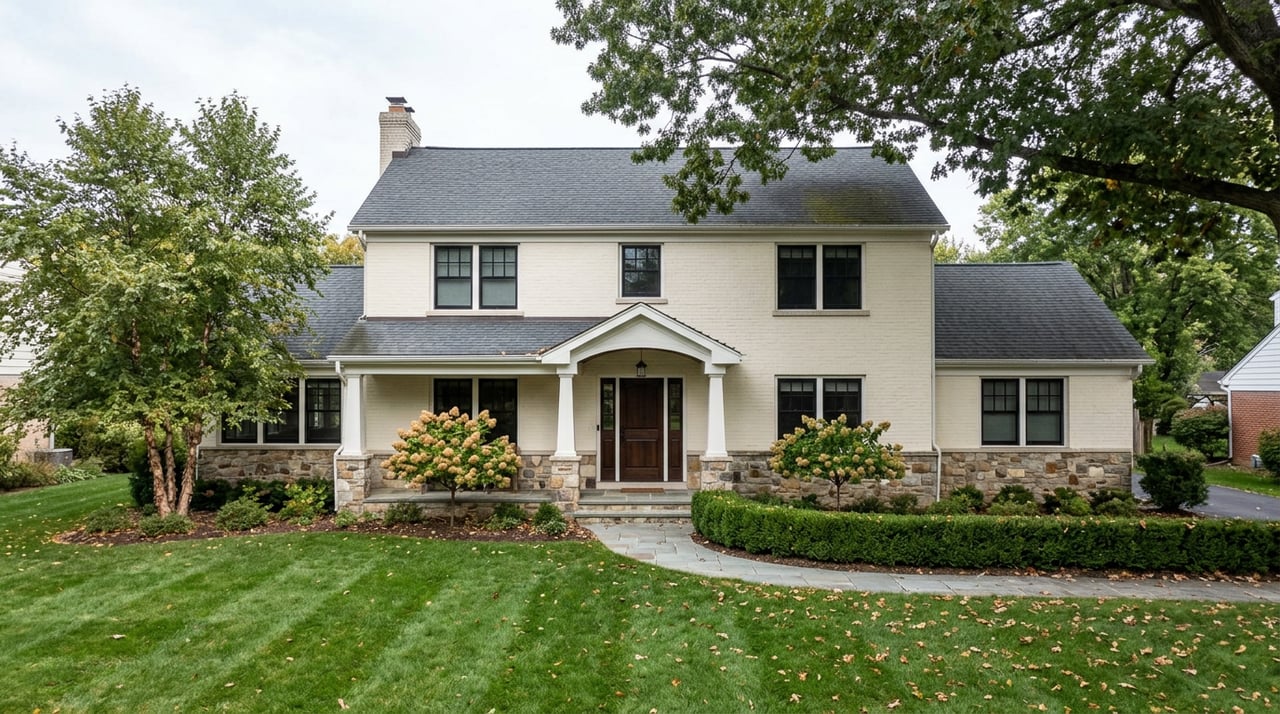
There's a second layer worth understanding before you start touring homes in this price range, and it has nothing to do with apartments. Builders have been selectively targeting Berkeley Heights' older ranches and split-levels, most of them originally built between the 1950s and 1970s, tearing them down or substantially rebuilding them. Over the past year, roughly 18% of homes that closed above $900,000 involved new construction or a major renovation, a meaningfully larger share than this traditionally conservative township has seen before. Most of these new builds are trading between $1.1 million and $1.6 million, with premium lots pushing past that range.
That matters for how you read the median. A $980,000 median value blends two very different products: original mid-century housing stock that hasn't been touched structurally in fifty years, and rebuilt or ground-up new construction with modern systems and a materially different footprint. If your target budget sits right around that median, the house you tour on a Tuesday might be original 1962 bones with updated paint, and the house you tour on Thursday might be a 2025 teardown rebuild with none of the original structure left. Same price bracket, entirely different inspection conversation, entirely different maintenance runway ahead of you.
For a buyer comparing Berkeley Heights against neighboring towns like Summit or Westfield, this is the detail that doesn't show up on a portal search filter. Knowing which segment of inventory you're actually shopping, legacy stock or recent rebuild, tells you more about what you're really paying for than the median number itself ever will.
The Takeaway for Anyone Comparing Suburbs Right Now
Berkeley Heights offers a useful lesson for anyone trying to read a suburban market by its headline numbers alone. A 185-acre redevelopment just added 328 new rental units, one of the larger single infusions of housing Union County has seen in years, and the resale market didn't loosen at all. The reason isn't a mystery once you look past the aggregate figures: the new supply and the existing single-family stock serve two different buyers with two different financial profiles, and the office campus underneath the apartments is quietly generating tomorrow's home shoppers rather than absorbing today's demand.
If you're weighing Berkeley Heights against other North-Central New Jersey towns, the question isn't whether the town has enough housing. It's which segment of that housing, legacy or rebuilt, rental pipeline or resale inventory, actually matches what you're trying to do next.
A Few Questions Worth Asking Before You Tour
Does RT600's completion change anything for buyers once it opens? Not directly. RT600 adds rental units, not resale inventory. Based on the pattern RT500 has already set, expect it to add more corporate renters to the pipeline rather than more homes to the for-sale market.
Is the 18% new-construction share likely to keep growing? The Park's redevelopment has raised the town's overall profile and buyer interest, which tends to attract more builders looking at teardown opportunities. Whether that pace continues depends on how much older housing stock remains available to redevelop.
Does a wealthier corporate renter base actually help home sellers? It can. A steady inflow of transferees who already know the town from having lived there as renters is a warmer buyer pool than one starting from scratch, though it's one factor among several that shape a sale's timeline and outcome.
If you're trying to figure out how a specific Berkeley Heights address fits into this picture, whether you're selling a legacy ranch, comparing it against a recent rebuild, or relocating into the area and want to understand which segment of the market actually matches your plans, the McGurl Team can walk through what your specific situation looks like against these numbers. Request a private consultation to start that conversation.